The neck and décolletage can show signs of ageing earlier than the face because the skin in these areas is relatively thin, frequently exposed to the sun and often receives less attention in daily skincare.
Over time, declining collagen and elastin can contribute to crepey skin, horizontal neck lines and sagging, while accumulated sun exposure can cause pigmentation and uneven tone across the chest.
The right treatment depends on what is actually causing the change you can see. Hydration and skin-quality treatments can help crepiness, collagen-stimulating treatments can improve firmness, and radiofrequency or a non-surgical neck rejuvenation plan may be more appropriate when laxity is the main concern.
Several factors make the neck and upper chest particularly vulnerable to visible ageing.
Hormonal changes, genetics, weight changes and lifestyle factors can also influence how and when these signs develop.
“The neck is an area people often start thinking about later than the face. By the time they notice crepiness or laxity, there can be several things happening at once, which is why I always look at skin quality, collagen loss and the degree of laxity separately.”
– Dr Sabika

Ageing of the neck and décolletage does not look the same for everyone. Common changes include:
Most people have more than one of these concerns. Identifying which changes are related to skin quality, collagen loss, pigmentation or more significant laxity helps determine which treatment is most appropriate.
There is no single best neck tightening treatment for everyone. Different treatments target different aspects of ageing, so the starting point should be the concern you want to improve.
| Main concern | What may be contributing | Treatment approach |
| Crepey, dehydrated skin | Reduced hydration and declining skin quality | Skin boosters or polynucleotides |
| Fine lines and loss of firmness | Collagen and elastin decline | Collagen-stimulating treatments |
| Mild-to-moderate loose neck skin | Reduced collagen and skin laxity | Radiofrequency skin tightening |
| More noticeable sagging or “turkey neck” | Greater laxity and potentially several contributing factors | Individualised non-surgical neck rejuvenation |
| Pigmentation and uneven chest tone | Cumulative sun exposure | Pigmentation-specific treatments and consistent SPF |
Often, more than one treatment mechanism is useful because several of these changes can occur together.
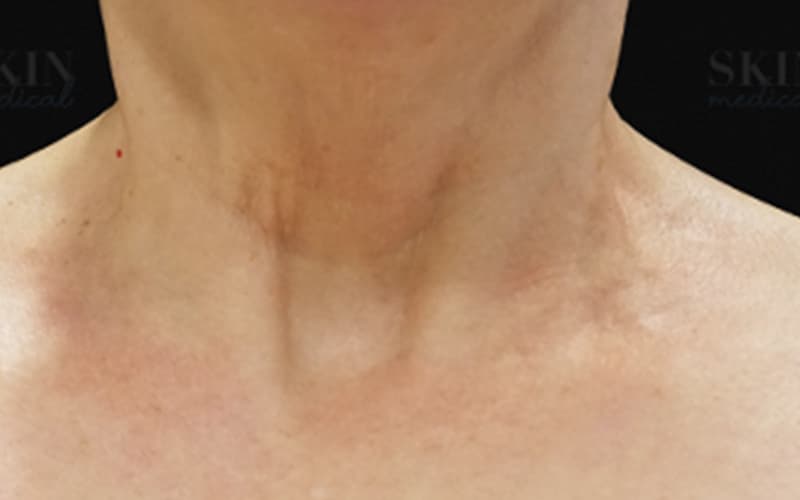
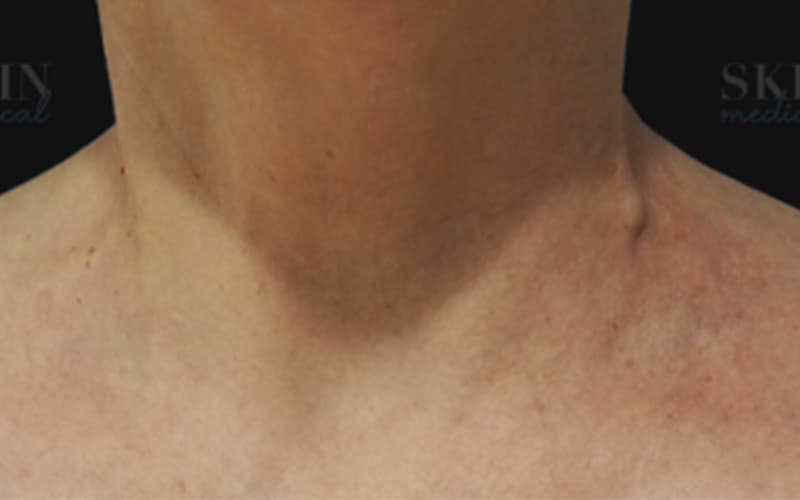
When the skin itself looks thin, dry or crepey, improving skin quality can be more useful than focusing solely on tightening.
Injectable skin boosters are designed to improve hydration and skin quality from within. Depending on the product used, they can help the skin appear smoother, more hydrated and more resilient.
Polynucleotides take a different approach, supporting regenerative processes within the skin and making them another option when texture and overall skin quality are the main concerns.
These treatments will not physically lift significant loose skin. Their role is primarily to improve the quality of the skin itself, which is why identifying the cause of the concern matters.
You can explore our skin booster treatments to learn more about the options available.
If the skin has begun to lose density and firmness, collagen-stimulating treatments may be considered.
Rather than simply adding temporary hydration, these treatments are designed to encourage processes involved in collagen production and remodelling. Changes therefore develop gradually as the skin responds over time.
They can be useful when the goal is improved firmness and skin quality rather than an immediate lifting effect.
Radiofrequency can help improve mild-to-moderate neck laxity by delivering controlled energy into the deeper layers of the skin.
The resulting heat stimulates collagen remodelling, which can gradually make the treated skin appear firmer. Because standalone RF does not require incisions or surgery, it can be useful for people looking for non-surgical neck rejuvenation with little disruption to their routine.
However, radiofrequency cannot remove significant excess skin or reproduce the result of a surgical neck lift. Its effectiveness depends on the degree of laxity and what is contributing to the appearance of the neck.
Read more about how radiofrequency skin tightening works and whether it may be appropriate for your concerns.
“A common mistake is to think every ageing neck simply needs tightening. Sometimes the bigger issue is crepey, dehydrated skin, while for someone else it is genuine laxity. Matching the treatment to what is actually causing the concern is much more important than choosing the most intensive option.”
– Dr Sabika
“Turkey neck” is an informal term usually used to describe loose or sagging skin beneath the chin and around the neck.
Whether it can be significantly improved without surgery depends on what is causing the appearance and how advanced it is. Mild-to-moderate skin laxity may respond to treatments that stimulate collagen and improve firmness. Skin-quality treatments can also help when crepiness is contributing to the appearance.
For more noticeable laxity, a combination approach may be needed. A non-surgical neck lift is not one single procedure, but a treatment plan selected according to the structures contributing to the concern.
It is also important to have realistic expectations. Non-surgical treatments can improve skin quality and firmness, but they cannot remove substantial excess skin in the way surgery can.
For a more detailed look at the options, read our guide to the non-surgical neck lift.
Skin ageing cannot be prevented entirely, but protecting the neck and chest from cumulative damage can help slow some of the visible changes.
Daily broad-spectrum SPF is particularly important. Sunscreen should extend beyond the face to exposed areas of the neck and décolletage, especially because UV exposure contributes to both collagen breakdown and pigmentation.
It is also worth extending an appropriate skincare routine onto these areas. Moisturising ingredients can help maintain hydration and barrier function, while certain active ingredients may be useful for signs of ageing. Because neck skin can be more sensitive than facial skin, stronger actives should be introduced gradually and according to your skin’s tolerance.
Avoiding smoking and excessive sun exposure will also help protect collagen and overall skin quality.

The best approach depends on whether your main concern is crepiness, lines, pigmentation, loss of firmness or more advanced sagging.
For some people, improving hydration and skin quality may be enough to make the area look noticeably fresher. Others may benefit more from collagen stimulation or radiofrequency tightening. Where several signs of ageing are present together, combining treatments may provide a more balanced result.
A consultation is important because what looks like a single concern in the mirror can have several underlying causes, and each requires a slightly different approach.
Explore our full range of neck and décolletage treatments or book a consultation at Skin Medical for an individual assessment, tailored to you.
[Speak with a specialist today]