
By Dr Sabika Karim 24th September 2026
Lumps after dermal filler can happen for several reasons, from temporary swelling while the area heals to product placement, migration or a delayed inflammatory reaction. Most changes immediately after treatment are part of the normal recovery process, but a persistent lump, a lump that develops weeks or months later, or one accompanied by pain, redness or skin colour changes should be assessed by a qualified clinician.
How a filler lump is treated depends on what has caused it. Sometimes observation or clinician-guided massage is appropriate, while hyaluronic acid filler can be dissolved with hyaluronidase when necessary. Other complications require different treatment.
Here is how to recognise the difference and when to seek help.
Some swelling, tenderness and unevenness can be normal shortly after dermal filler treatment.
Filler is placed into the tissues using a needle or cannula, so a degree of inflammation and swelling can occur as the area settles. This can temporarily make the result look or feel uneven.
The lips are particularly prone to swelling, and the final result should not normally be judged immediately after treatment.
However, not every lump should automatically be assumed to be swelling. How the area looks and feels, when the lump appeared and whether you have any other symptoms all matter.
If you are concerned about a new or persistent lump, contact your treating clinician rather than repeatedly pressing or massaging it yourself.

There is no single test you can perform at home to determine exactly what a lump is, but its timing and symptoms can provide useful clues.
| When it appears | What may be happening | What to do |
| Immediately after treatment | Swelling, bruising or temporary unevenness can occur as part of normal recovery | Follow your aftercare advice and monitor the area |
| First few days | Swelling can continue and may make the area feel temporarily uneven | Allow the area time to settle unless you develop concerning symptoms |
| After the initial healing period | Persistent product irregularity, placement or another cause may need to be considered | Arrange a review with your practitioner |
| Weeks or months later | Migration or a delayed inflammatory nodule may be possible, among other causes | Arrange a clinical assessment rather than attempting to treat it yourself |
| At any time with significant pain, unusual skin colour changes or rapidly worsening symptoms | A complication requiring prompt assessment may be present | Contact a qualified medical practitioner urgently |
Timing alone can’t diagnose the cause, so always speak to a clinician if you’ve noticed any persistent, delayed or unusual side effects after getting filler.
“The first thing I want to know when someone comes to me with a filler lump is when it appeared and how it has changed. A lump two days after treatment is very different from one that develops several months later, so we need to understand the cause before deciding how to treat it.”
– Dr Sabika
There are several possible causes of lumps after filler, and they do not all require the same treatment.
If filler sits too superficially or is distributed unevenly, it may create a visible or palpable irregularity. The likelihood and appearance can vary according to the area treated and the type of product used.
Overcorrection can create fullness or irregularity if more product has been placed than is appropriate for the tissue or desired result.
Filler can sometimes be found outside the intended treatment area. This is often referred to as filler migration and may contribute to unwanted fullness, contour changes or palpable irregularities.
A filler nodule can sometimes develop weeks, months or even longer after treatment.
These delayed reactions can have several potential causes and require proper assessment. A clinician will consider the timing, symptoms, filler history and other relevant factors before recommending treatment.
Infection following dermal filler is uncommon, but it is important to recognise because management is different from that of a simple product irregularity.
Increasing tenderness, redness, warmth, swelling or systemic symptoms such as fever should prompt medical assessment.
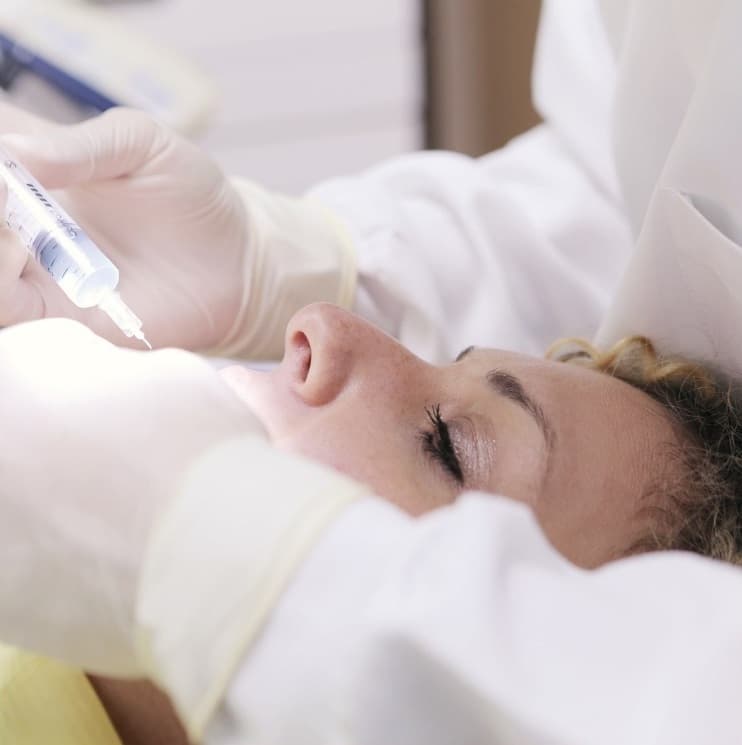
Sometimes, but you should only massage a filler lump if your treating practitioner has advised you to do so.
For certain early product irregularities, a clinician may recommend or perform gentle massage to help smooth the area. However, massage is not appropriate for every type of lump.
In particular, repeatedly manipulating an area without knowing what has caused the problem may make assessment more difficult or aggravate the tissues.
If you can feel a lump after filler, contact your practitioner and follow their advice rather than trying to massage it away yourself.
Treatment depends on the cause of the lump rather than simply its appearance.
Observation and time may be appropriate when the change is related to normal post-treatment swelling or another issue that the clinician expects to resolve as the area settles.
Clinician-guided massage may sometimes be appropriate for a product irregularity, depending on the filler, location and timing.
Hyaluronidase can be used to dissolve hyaluronic acid dermal filler. The enzyme breaks down hyaluronic acid and can be useful when HA filler has been incorrectly placed, migrated or needs to be removed for another clinical reason.
At Skin Medical, ultrasound can also be used in appropriate cases to help identify the location of filler and guide treatment. You can read more in our guide to filler dissolving with ultrasound and hyaluronidase.
Further medical treatment may be necessary for certain inflammatory nodules or infections. The appropriate management depends on the diagnosis and should be determined by an experienced medical practitioner.
“I wouldn’t recommend dissolving every lump simply because hyaluronidase is available. We first need to establish whether we’re dealing with the filler itself, inflammation, infection or something else. Safe correction starts with the right diagnosis.”
– Dr Sabika
Yes, a lump can become noticeable months after chin filler, but a delayed lump should be clinically assessed rather than assumed to be normal filler movement.
Possible explanations include a delayed inflammatory nodule or changes related to the filler itself. Other causes of a lump may also be unrelated to the previous filler treatment, which is another reason an examination is important.
Tell your clinician when the filler was performed, which product was used if you know, whether you have had filler elsewhere and when you first noticed the lump. This information can help with assessment.
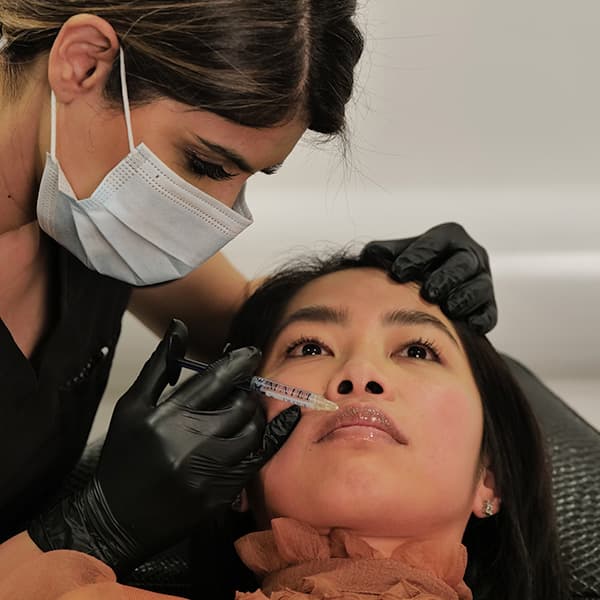
Most small filler irregularities do not represent an emergency, but some symptoms require prompt medical attention.
Seek urgent clinical advice if you experience:
Sudden pain and skin colour changes shortly after filler treatment can be signs of a vascular occlusion, where blood flow has been compromised. This is a time-sensitive complication and requires urgent assessment and treatment.
If you have visual disturbance, loss of vision or neurological symptoms during or after facial filler treatment, seek emergency medical attention immediately.

Some lumps and unevenness caused by early swelling will improve as the treated area heals. Other filler lumps may persist until their underlying cause is addressed.
This is why it is better to think about filler lumps according to cause rather than appearance alone. A product irregularity, migrated filler, inflammatory nodule and infection can all present as a “lump”, but they may require very different management.
The reassuring point is that clinicians have several ways to investigate and manage filler complications. If you are worried about an area that has been treated, having it assessed is safer than trying to diagnose or correct it yourself.
You can learn more about how we assess lumpy fillers at Skin Medical, explore our approach to dermal fillers, or book a consultation with one of our friendly medical experts if you have a filler result you would like us to review.