Written by Dr Sabika Karim. 16th August 2026
The cheeks are the structural centrepiece of the midface. When they are full and well-positioned, they give the face its characteristic youthful shape: high, defined cheekbones with smooth transitions to the lower eyelid above and the nasolabial fold below. As volume is lost with age, this support structure deflates, and the consequences are felt across the entire face.
Cheek fillers are one of the most effective ways to restore that foundation, and when done well, the results are not about appearing augmented but about looking like a younger version of yourself.
Volume loss in the midface is one of the earliest and most significant drivers of facial ageing. The process begins in the mid-thirties for most patients and accelerates from the forties onward.
The cheeks contain several discrete fat compartments that sit at different depths. With age, these compartments deflate and descend. Fat that was once positioned high and forward moves downward toward the nasolabial fold and jowl, contributing to heaviness in the lower face even as the midface itself becomes hollow.
Simultaneously, the underlying cheekbone loses density through gradual bone resorption, reducing the platform on which the soft tissue rests. The skin thins and loses elasticity. The combined effect is a flattening of the cheek contour, a deepening of the tear trough and nasolabial fold, and a general heaviness and descent of the lower face.
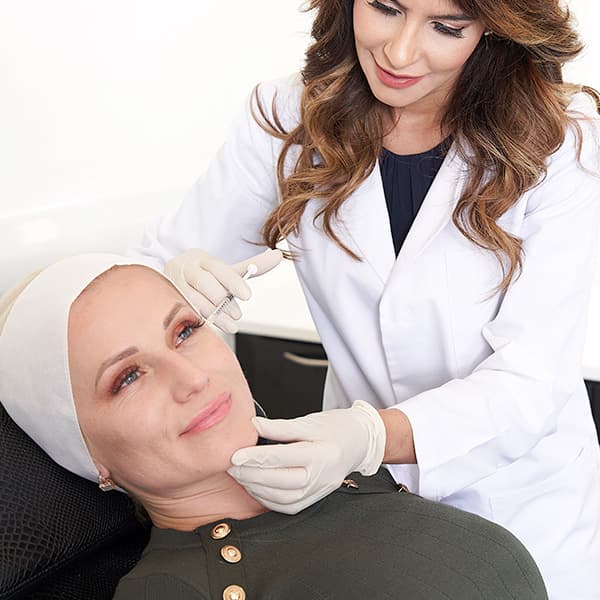
Cheek filler uses a hyaluronic acid-based dermal filler, typically a medium to high-viscosity product that provides lift and structural support rather than simply adding surface softness. The filler is placed at specific depths, often at or near the periosteum (the bone surface), to restore the scaffold that the underlying structures have lost.
The placement is strategic. The team at Skin Medical are not simply adding volume to the cheek in isolation. They are assessing the whole face and placing filler in a way that lifts the midface and, in doing so, improves the appearance of adjacent areas: softening the nasolabial fold, reducing tear trough hollowing, and refining the jawline, all without touching those areas directly.
Treatment takes 20 to 30 minutes. Topical anaesthetic is used beforehand and the filler contains lidocaine for additional comfort. Some swelling and bruising can be expected in the days following treatment.
One of the most common patient concerns about cheek filler is looking overdone. The exaggerated, shelf-like cheek appearance associated with over-augmentation is the result of too much product placed too superficially or without adequate attention to facial proportions. It is a product of poor technique rather than an inherent outcome of the treatment itself.
A natural result from well-placed cheek filler is a subtle restoration of the structural support the face has lost. The face looks lifted and refreshed. The skin sits better. The lower face appears less heavy. Patients frequently report that others notice they look well or rested without being able to identify what has changed.
The goal at Skin Medical is always to work with your anatomy rather than impose a shape, and to replace what has been lost rather than create something new.
Cheek filler placed at depth tends to last longer than filler placed more superficially in other areas of the face, because it is subject to less movement. Results typically last 12 to 18 months, and in some cases longer, depending on the product used and individual metabolism. Maintenance treatment at that point helps preserve the result.

Volume requirements vary considerably by individual. Patients with mild early volume loss may achieve a significant improvement with 1 ml per side. Patients with more significant deflation may require 1.5 to 2 ml per side. These quantities are discussed and agreed during the consultation, with the aim of achieving a proportionate result rather than following a fixed protocol.
It is worth noting that cheek filler is often most effective as part of a broader treatment plan. Treating the cheeks in isolation can improve the midface significantly, but patients with concerns across the whole face often benefit from a combined approach that addresses the chin, jawline or other areas alongside the cheeks.
If you are concerned about hollowing, dark circles or a tired appearance beneath the eyes, a consultation at Skin Medical will establish whether tear trough filler is suitable for you, or whether an alternative approach would be more effective.

Cheek fillers are injectable hyaluronic acid treatments placed in the midface to restore lost volume, improve cheek contour, and lift the surrounding facial structures. They are one of the most effective non-surgical treatments for age-related midface deflation.
By restoring volume and structural support in the midface, cheek fillers lift the overlying skin and adjacent structures. This can soften nasolabial folds, reduce tear trough hollowing and improve the definition of the jawline, all without directly treating those areas.
Not when performed correctly. An overdone appearance is the result of too much product placed too superficially or without regard for facial proportions. A well-placed cheek filler restores what has been lost and produces a refreshed, natural result rather than an augmented look.
Cheek filler placed at depth typically lasts 12 to 18 months, and sometimes longer. Results vary depending on the product used and how quickly an individual metabolises hyaluronic acid. Maintenance treatment at that point helps sustain the improvement.
Topical anaesthetic is applied before treatment, and the filler contains lidocaine for additional comfort. Most patients tolerate the procedure well and describe mild pressure rather than significant pain.
This depends on the degree of volume loss and your facial anatomy. Most patients require between 1 and 2 ml per side. The precise amount is determined during the consultation based on a thorough assessment of your face.
Mild swelling and bruising are common and typically resolve within five to seven days. Most patients feel comfortable in social settings within a few days of treatment.
Yes, indirectly. By restoring midface volume, cheek filler lifts the tissue above the nasolabial fold and reduces the depth of the fold itself. This is often more effective than treating the fold directly with filler, which can add heaviness rather than lift.
Yes. Some younger patients have naturally flat or underdeveloped cheekbones and may benefit from filler for structural rather than age-related reasons. Cheek filler is not exclusively an anti-ageing treatment; it can also improve facial balance and contour in patients of any age.
You can book a consultation through skinmedical.com. Our clinicians will assess your midface anatomy and recommend the most appropriate approach for your concerns and aesthetic goals.