Written by Dr Sabika Karim. 16th July 2026
If you have noticed fine lines forming around or on your lips, you are not alone. Wrinkly lips and vertical lip lines are among the most common concerns patients raise in clinic, and they can develop earlier than many people expect. The good news is that the causes are well understood, and there are effective treatments for each of them. This article explains why lip lines form, why they sometimes appear at a young age, and what can be done to address them.
Lip lines do not have a single cause. In most patients, several factors are working together, and the best treatment approach depends on identifying which ones are most relevant for you.
The lips and the skin surrounding them are particularly vulnerable to ultraviolet damage. Sun exposure breaks down collagen and elastin in the delicate skin around the mouth, causing the fine vertical lines commonly associated with ageing. This is one of the primary reasons lip lines can appear in your thirties or even late twenties. Applying broad-spectrum SPF daily to the perioral area is one of the most effective preventive measures available.
The orbicularis oris, the circular muscle surrounding the mouth, contracts hundreds of times a day through speaking, eating, smiling and expression. Over time, these repeated movements create creasing in the overlying skin. Clinicians often call this smoker’s lines, though they appear just as readily in people who have never smoked.
When the skin around the mouth is chronically dehydrated, it loses its plumpness and ability to recover from repeated movement, causing them to become wrinkly. The result is lines that appear more deeply set and that do not resolve when the face is relaxed. This is compounded by a gradual reduction in the skin’s natural hyaluronic acid content with age.
Some individuals naturally develop lip lines earlier than others. Thinner skin, a naturally more active mouth, and genetic differences in collagen metabolism can lead to lip lines appearing in younger patients. If you are asking why your lips are wrinkly at a young age, genetics combined with sun exposure and habitual expression are the most likely explanations.

Effective treatment depends on understanding which of the above factors is driving your lines. In practice, most patients benefit from a combination of approaches.
For lines driven primarily by dehydration and loss of skin quality, skin boosters are an excellent first-line treatment. They deliver hyaluronic acid deep into the dermis, restoring the moisture reservoir that supports the overlying skin. The result is a softer, plumper appearance to the perioral area with improved texture.
Polynucleotides work at a cellular level, stimulating fibroblasts to produce more collagen and elastin. They are particularly effective for patients with fine lines caused by cumulative sun damage or early ageing, and they improve skin quality gradually over four to eight weeks following treatment.
Profhilo is a bio-remodelling treatment that rehydrates and restructures the dermis using a high concentration of hyaluronic acid. It does not add volume in the conventional sense, but it significantly improves the tone, quality and hydration of the skin around the mouth. For patients with lip lines accompanied by general skin laxity, Profhilo can produce a marked improvement in the appearance of both.
Where lip lines are deeper and more structural, a small amount of dermal filler placed precisely along the lip border or directly into the lines themselves can provide definition and reduce the shadowing that makes lines more visible. This is a subtle intervention, not a dramatic volume treatment, and when performed by an experienced clinician it produces a natural result.
Retinoids accelerate cell turnover and stimulate collagen production, addressing lines caused by sun damage and ageing from the outside in. Vitamin C provides antioxidant protection and brightens the skin around the mouth. SPF prevents further UV-related collagen loss. These are not optional extras: consistent skincare forms the foundation on which any in-clinic treatment builds.
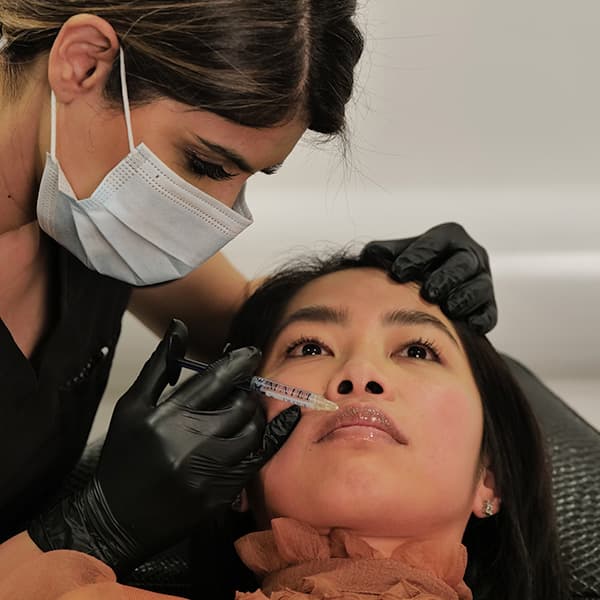
Skin boosters typically show visible improvement within two to three weeks of treatment, with full results after the second session four weeks later. Profhilo follows a similar schedule. Polynucleotides show gradual improvement over four to eight weeks. Retinoid-based skincare takes a minimum of twelve weeks to produce meaningful results. Filler results are visible immediately and last 9 to 12 months.
Patients in their twenties and thirties frequently ask why their lips are already showing lines. The most common reasons are a combination of habitual sun exposure without SPF on the lip area, genetics, repeated muscle movement, and dehydration. Smoking or frequent straw use can accelerate the formation of vertical lines significantly. Starting treatment early, particularly with skin boosters and consistent SPF, produces the best long-term outcomes.
If you are concerned about lip lines or wrinkly lips, a consultation at Skin Medical will identify the underlying cause and match you to the most appropriate treatment. Our clinicians take a thorough approach that considers your skin quality, anatomy and aesthetic goals before recommending any treatment.

Smoker’s lines are the fine vertical lines that form above the upper lip as a result of repetitive orbicularis oris muscle contraction. Despite the name, they develop in non-smokers too, in anyone who makes frequent pursing movements with the mouth.
The best treatment depends on the cause. Skin boosters and polynucleotides are excellent for lines driven by dehydration and skin quality. Profhilo addresses bio-remodelling and laxity. Light filler can reduce the appearance of deeper structural lines. Medical-grade skincare with retinoids and SPF is essential for prevention and maintenance.
Filler is most useful for deeper structural lines and for adding definition to the lip border, which reduces shadowing. It is not always the first treatment for fine surface lines: skin boosters and Profhilo often address these more effectively. A consultation will identify which approach is right for you.
Yes. Skin boosters deliver deep hydration to the perioral skin, improving its quality and reducing the appearance of fine lines caused by dehydration and loss of skin integrity. They are often the most natural-looking option for patients with early or mild lip lines.
Skin boosters and Profhilo results typically last six to twelve months. Filler results last 9 to 12 months. Polynucleotide improvements develop over four to eight weeks and are maintained with repeat treatments. Skincare benefits are ongoing as long as the routine is maintained.
Yes, to a significant extent. Daily broad-spectrum SPF applied to the perioral area prevents further collagen loss from UV exposure. Medical-grade retinoids stimulate collagen production. Avoiding habitual pursing movements and staying well hydrated all contribute to slowing the formation of lip lines.
Yes. The appropriate treatment is tailored to the individual’s skin type, age, and the severity of their concern. Younger patients typically benefit from preventive skincare and skin boosters. Older patients may benefit from a more comprehensive approach combining multiple treatments.
A consultation at Skin Medical is the best way to identify the cause of your lip lines and find the most effective treatment for your skin. Our clinicians will assess your concern and provide a personalised recommendation.