Written by Dr Sabika Karim. 26th August 2026
Anti-wrinkle injections are one of the most widely performed aesthetic treatments in the world, yet they remain surrounded by a great deal of misunderstanding. Patients worry about looking frozen or expressionless. Others are unsure whether they are ready to start, or whether starting too early will mean they need treatment forever.
This article explains how anti-wrinkle injections actually work, which areas they treat, what a natural result looks like, and how to think about when to begin.
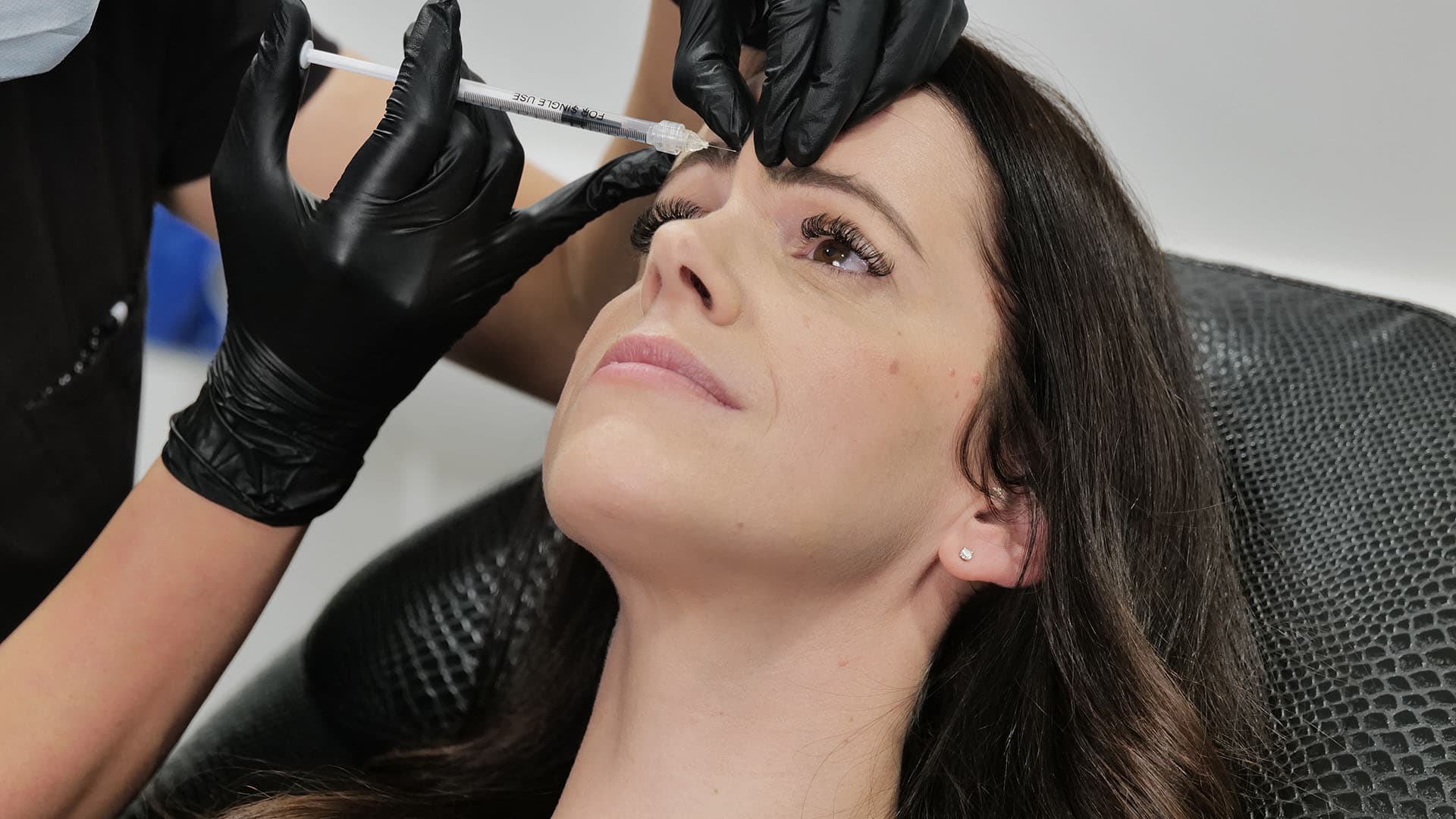
Anti-wrinkle injections use botulinum toxin type A, a purified protein that temporarily blocks the nerve signals responsible for muscle contraction. When injected into a specific facial muscle, the muscle is unable to contract with its usual force for a period of several months. The overlying skin, no longer being repeatedly folded by the muscle beneath it, is able to smooth out.
The effect is temporary and entirely reversible as the toxin is metabolised. Results typically last three to four months initially, and in many patients who maintain treatment regularly, the duration extends to five or six months over time, as the treated muscles gradually become less active.
It is worth being clear that botulinum toxin does not fill lines. It prevents the muscular movement that creates them. For lines that are already etched into the skin at rest (known as static lines), anti-wrinkle injections will reduce them but may not eliminate them entirely. A combination approach with skincare, skin boosters or light filler is sometimes needed for static lines.
Anti-wrinkle injections are used across several areas of the upper and mid-face, and increasingly for a range of functional and cosmetic concerns beyond wrinkle reduction.
A natural result from anti-wrinkle injections means reduced movement in the treated area without eliminating expression entirely. The face should still be able to convey emotion. Lines should soften or disappear during animation rather than the skin becoming a static, immobile surface.
An overdone result is almost always the consequence of too much product, too broadly distributed, by someone who has not accurately mapped the individual anatomy of the patient in front of them. The frozen look is not inherent to the treatment. It is a failure of technique and dosing.
At Skin Medical, the approach is conservative and precise. Starting with a dose that achieves a good but not maximal result, reviewing at two weeks, and adjusting from there produces the most consistently natural outcomes.
Initial results last three to four months. With regular maintenance over time, many patients find that the same dose lasts longer, as the treated muscles gradually become less reactive. The treatment does not permanently alter the muscles, and if treatment is stopped, normal muscle activity gradually returns and lines will reform over time.


There is no single right age to begin. The relevant question is not how old you are but what your skin is doing. If dynamic lines (lines that appear with expression and disappear at rest) are beginning to etch into the skin over time and no longer fully resolve when the face is relaxed, that is typically the point at which treatment adds genuine value.
Starting earlier, while lines are still purely dynamic, is primarily preventive. It reduces the cumulative folding of the skin that leads to static lines and can mean that when you do develop static lines, they are less deep than they would have been. This is a reasonable approach for patients in their late twenties and thirties, though it is not the right starting point for everyone.
If you are considering anti-wrinkle injections for the first time, or if you have had treatment elsewhere and want a more natural result, a consultation at Skin Medical is the right starting point. Our clinicians will assess your facial anatomy, discuss your concerns and design a treatment plan that suits your individual face.

Anti-wrinkle injections use botulinum toxin type A to temporarily relax specific facial muscles, reducing the appearance of dynamic lines caused by repeated movement and expression. The effect is temporary and reversible, lasting three to six months.
Discomfort is minimal. The needles used are very fine, and treatment is quick. Most patients describe a mild stinging or pressure sensation. No anaesthetic is typically required, though topical anaesthetic cream can be applied on request.
Results typically last three to four months initially. With regular treatment over time, many patients find results extend to five or six months as the treated muscles gradually become less active.
Not with a skilled, conservative approach. A frozen appearance is the result of too much product or poor technique. A natural result retains movement and expression while reducing the lines caused by that movement.
There is no single right age. The relevant question is whether dynamic lines are beginning to etch into the skin at rest. Many patients begin in their late twenties to thirties, either preventively or once lines are becoming more established. A consultation will help you decide whether the timing is right for you.
The most common areas are the forehead, frown lines between the brows, and crow’s feet. Additional areas include the brow for lifting, bunny lines on the nose, the masseter for jaw slimming, the neck bands, and the upper lip border (lip flip). Anti-wrinkle injections are also used to treat hyperhidrosis (excessive sweating).
Botulinum toxin type A has been used in medical and aesthetic practice for decades and has an extensive safety record when administered by a trained clinician. Side effects are typically mild and temporary. Rare risks include bruising, headache, or localised weakness in an adjacent muscle, which resolves as the product metabolises.
Anti-wrinkle injections relax muscles to prevent lines from forming. Dermal filler adds volume to restore structure, smooth lines or enhance contours. They work by completely different mechanisms and are often used together as part of a combined treatment plan.
Starting treatment while lines are still purely dynamic (appearing only with movement) can reduce the cumulative skin folding that leads to permanent static lines. In this sense, early treatment has a preventive benefit. It will not, however, prevent all signs of ageing.
You can book a consultation at skinmedical.com. Our clinicians will assess your facial anatomy, discuss your concerns and recommend the right treatment approach for your individual face.