Written by Dr Sabika Karim. March 17, 2026.
One of the most common questions I’m asked at our Skin Medical clinic in Northwood, London is about dissolving dermal filler. Sometimes patients come to see me because they’re unhappy with filler they’ve had elsewhere. Other times the filler has simply been there for many years and the shape has gradually changed. In many of these cases, dissolving the filler is the safest way to restore a natural look before considering any further treatment.In the past, dissolving filler was often done based purely on visual assessment and touch. While this can work well in some situations, modern aesthetic medicine now offers a much more precise option: ultrasound-guided filler dissolving.
Using ultrasound together with hyaluronidase allows us to see exactly where filler is located beneath the skin and dissolve it in a much more controlled way.
Dermal Fillers in Northwood are designed to gradually break down over time, but they don’t always disappear exactly as expected. In some cases, filler may remain in the tissue for years or move slightly from where it was originally placed. Patients may notice that the area looks different from when they first had treatment.
Common reasons patients seek filler dissolving include:
In these situations, dissolving the filler can help reset the area before deciding whether further treatment is needed.
“Dissolving filler isn’t just about removing product,” says Dr Sabika. “It’s about understanding exactly where that filler sits and deciding how much should be removed to restore balance.”

Most modern dermal fillers are made from hyaluronic acid. This is a naturally occurring substance in the body that helps retain moisture and provide structure within the skin.
Hyaluronidase is an enzyme that breaks down hyaluronic acid. When injected into an area containing hyaluronic acid filler, it dissolves the filler so the body can gradually absorb it. The treatment itself is usually quick, but the key to achieving a good result is understanding exactly where the filler sits within the tissue.
This is where ultrasound has become particularly valuable.
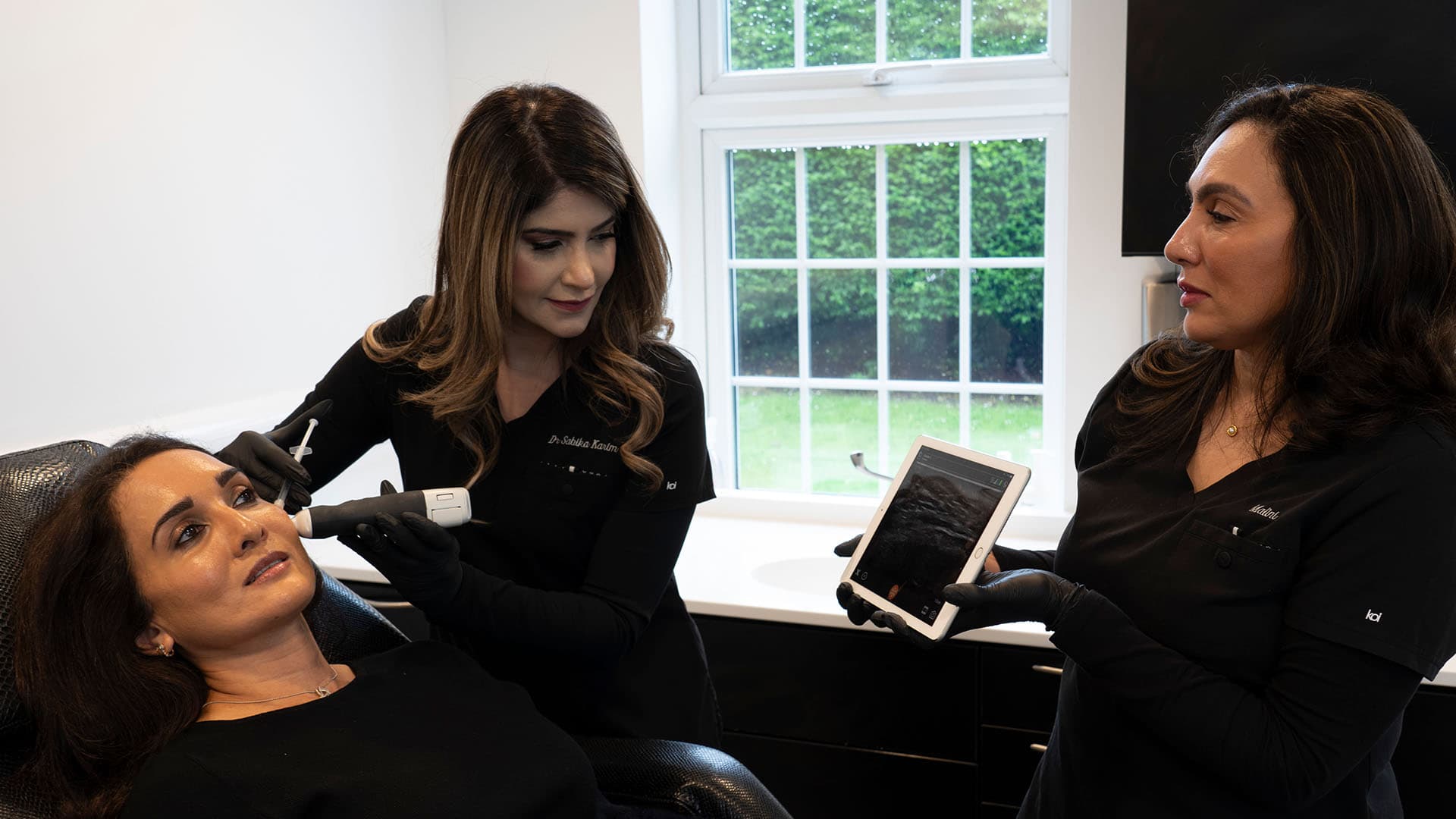
Ultrasound imaging allows practitioners to see beneath the skin in real time. Rather than guessing where filler might be located, we can actually visualise the filler deposits and the surrounding anatomy. This makes it possible to target the dissolving treatment much more accurately.
Using ultrasound guidance can help:
For patients who have had filler placed multiple times or in different clinics, ultrasound can also help identify areas where older filler may still remain.
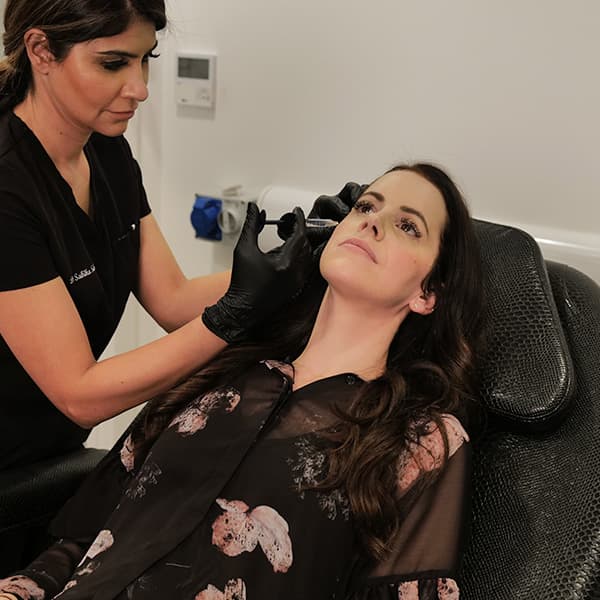
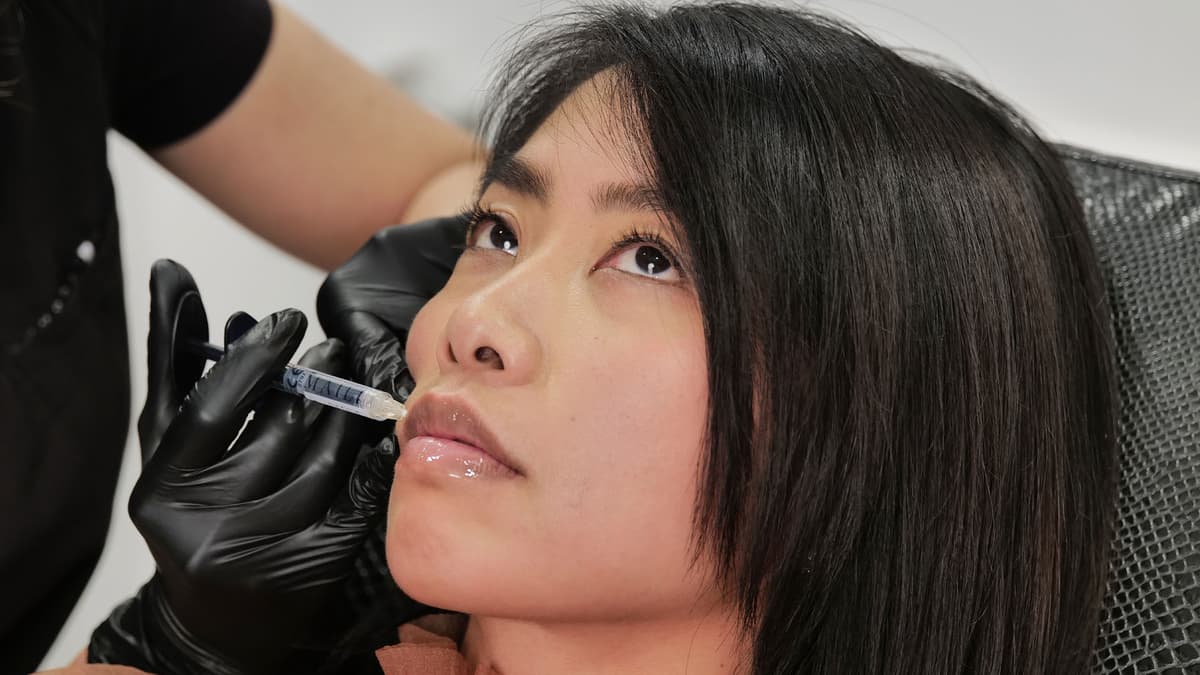
When a patient comes in for filler dissolving at the Skin Medical clinic in Northwood, the first step is always a consultation. I begin by discussing the patient’s treatment history and examining the area. If ultrasound imaging is used, this allows me to see where filler is present beneath the skin. Once the filler has been mapped, hyaluronidase is injected into the targeted areas. The enzyme begins to break down the filler over the following hours and days. Some swelling can occur initially as the filler dissolves, but this typically settles within a few days.
In some situations, more than one dissolving session may be recommended to achieve the best result.
Hyaluronidase is very effective at dissolving hyaluronic acid fillers, but the exact response can vary depending on factors such as the type of filler used and how long it has been present. Some patients notice a clear change within the first 24 to 48 hours, while others may see the result develop gradually over several days. Occasionally a second treatment may be required if small amounts of filler remain.
Once the filler has been dissolved, the tissue needs time to settle before considering further treatment. In some cases, patients decide they prefer the natural appearance after dissolving and choose not to replace the filler. In other situations, a small amount of carefully placed filler may later be used to restore structure in a more balanced way. The goal is always to achieve a natural, harmonious result rather than simply replacing what was there before.
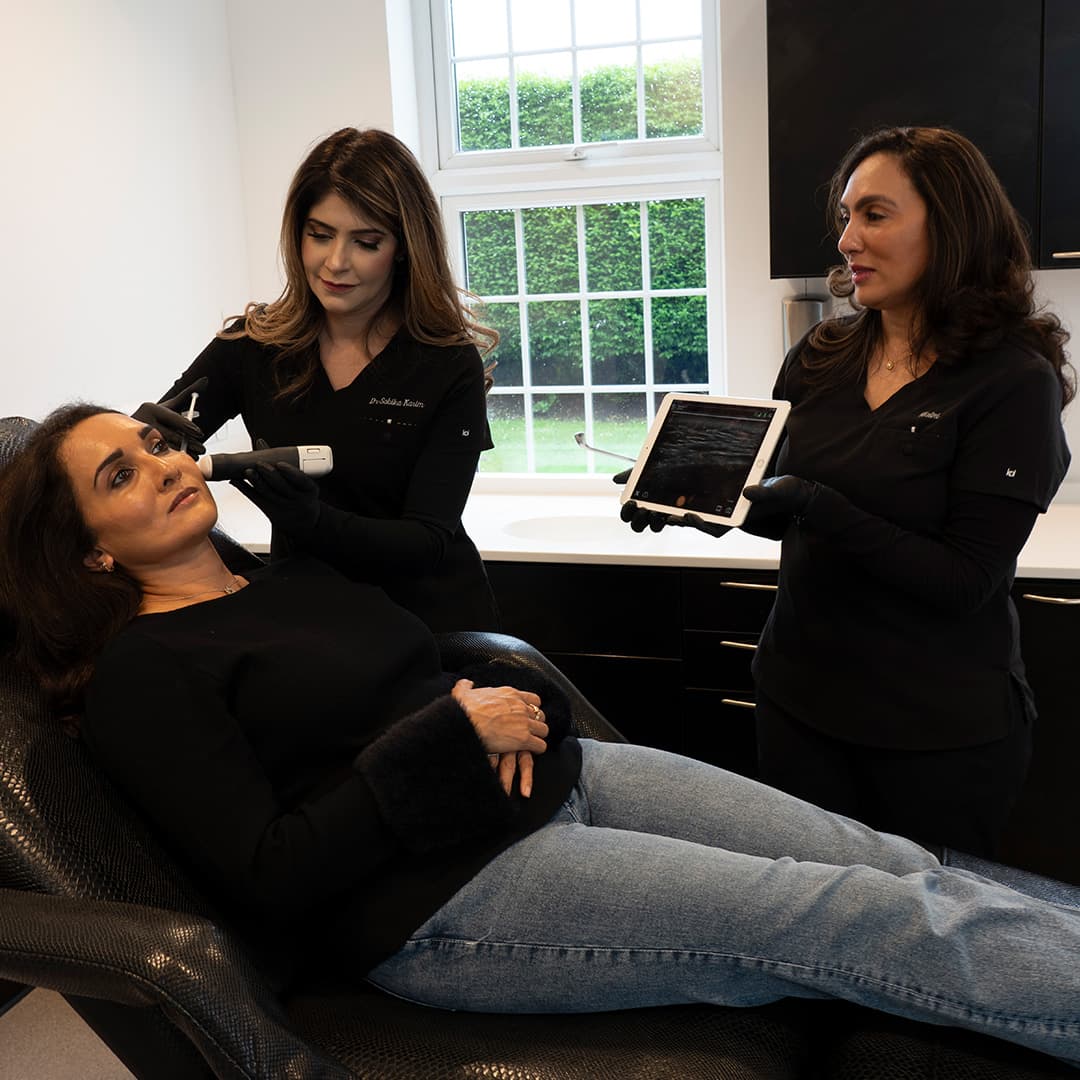
“In many cases, dissolving filler isn’t the end of the journey,” says Dr Sabika. “It’s simply a reset that allows us to rebuild a more natural result afterwards.”
Filler dissolving is sometimes described as a simple treatment, but it requires careful judgement. Removing too much filler too quickly can create unwanted volume loss, while removing too little may not correct the issue. Using ultrasound guidance adds another layer of precision, allowing the treatment to be tailored more accurately to the patient’s anatomy. For patients who are concerned about existing filler or unhappy with a previous result, a thorough consultation with an experienced doctor is always the best place to start.
Many patients begin to notice a change within 24 to 48 hours. The enzyme starts breaking down hyaluronic acid filler shortly after it is injected, although the final result may take several days as swelling settles and the body absorbs the dissolved filler.
Ultrasound can significantly improve precision. By allowing the practitioner to visualise filler beneath the skin, it helps identify where the product is located and how deep it sits. This makes it possible to target dissolving treatment more accurately.
Hyaluronidase only works on fillers made from hyaluronic acid. Most modern fillers fall into this category, but other types of filler cannot be dissolved using this enzyme.
In many cases the area simply returns closer to its natural appearance once the filler is removed. Some patients choose to leave the area untreated afterwards, while others decide to replace filler later in a more controlled way.
The treatment involves small injections, similar to filler placement. Numbing cream can be used to improve comfort during the procedure.
Some patients achieve their desired result with a single treatment. Others may require a second session, particularly if there is a large amount of filler present or if the filler has been in place for a long time.
Yes. If further filler treatment in Northwood is desired, it is usually recommended to allow the area to settle for a period of time before placing new filler.
Read our glowing Google reviews from our patients
The results really do speak for themselves. Our patients talk about how much brighter, clearer, and healthier their skin feels. Proof of the care, expertise, and attention to detail we provide at Skin Medical.
Dr Sabika Karim was the consumate professional. I deeply respect her knowledge, experience and approach. She truly is one of a kind. I have worked within the field of medicine and skincare myself for 40 years and I would wholeheartedly recommend the clinic to anyone. I also had a Hydrafacial with Malini Patel who really listened to my concerns around my sensitive reactive skin. She gave me a lovely treatment which did not irritate my skin. Many thanks all round.
I was recommended to Skin Medical by a friend and I’m thrilled with the results! It’s extremely reassuring to be able to talk through in detail any treatments with a professional, caring and medically trained individual in a warm and welcoming environment. The team are all wonderful.
I had a really wonderful experience today and couldn’t be happier with the service I received. From the moment I arrived, the staff were warm, welcoming, and incredibly helpful, which immediately put me at ease. Dr Sabika was extremely professional, kind, and reassuring throughout the entire process. She took the time to explain everything clearly, answered all of my questions patiently, and made sure I felt comfortable at every step. I was quite nervous beforehand, but her calm and caring approach completely changed how I felt.
Skin Medical is a doctor-led aesthetic clinic known for subtle, natural-looking results delivered safely. We serve patients from the world over, but closer to home we serve: London, Middlesex, Herefordshire, Buckinghamshire, Berkshire and Oxfordshire. We are within easy reach of Heathrow airport, M25, M1 and A40 by road and London by Met line tube. Our local patients come to us from Northwood, Rickmansworth, Pinner, Hatch End, Ruislip, Harrow, Beaconsfield, Amersham, Chorleywood, Marlow, Stoke Poges and Windsor.